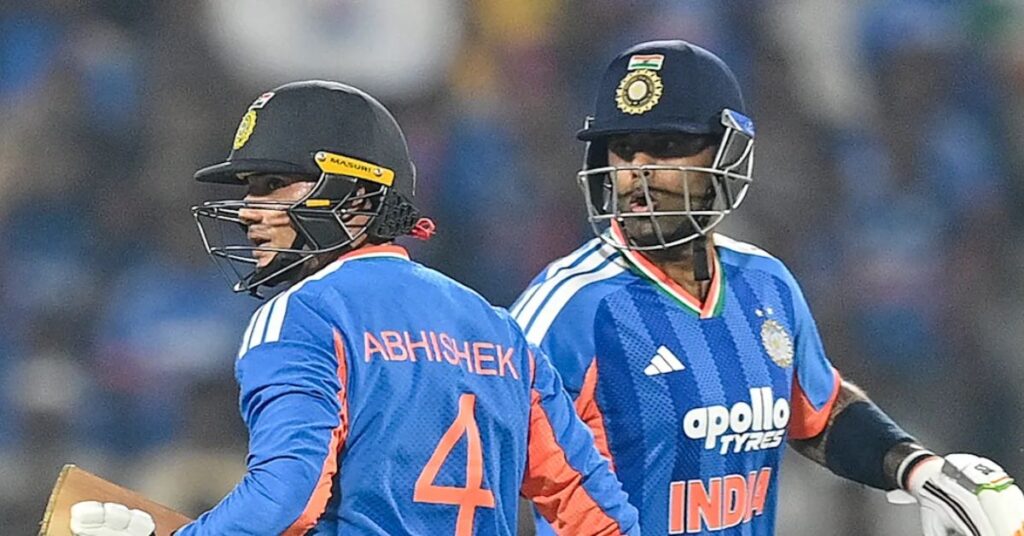

As the ICC Men’s T20 World Cup draws closer, India’s preparations appear to be gathering momentum at exactly the right time. One of the biggest positives to emerge from the final lead-up fixture against New Zealand has been the dominant performance of opener Abhishek Sharma, who not only set the tone with the bat but also revealed valuable insights into the mindset and preparation behind his recent success.
In modern T20 cricket, the top order plays a decisive role. Matches are often shaped within the first six overs, and teams that consistently win the powerplay gain a massive advantage. Abhishek Sharma’s performance on the eve of the T20 World Cup has therefore sparked optimism—not just because of the runs scored, but because of the clarity, confidence, and tactical awareness he displayed at the crease.
This blog explores Abhishek Sharma’s approach to batting, the key principles he believes drive top-order success, his preparation methods ahead of the T20 World Cup, and what his form means for India’s campaign in the global tournament.
The Timing Could Not Be Better for India
India entering the T20 World Cup with an in-form opener is a significant boost. Over the years, India’s success in T20 tournaments has often hinged on:
- Powerplay momentum
- Top-order stability combined with aggression
- Clear role definition for openers
Abhishek Sharma’s dominant outing against New Zealand arrived at a crucial moment—providing both reassurance and momentum just days before the World Cup begins.
Abhishek Sharma: From Prospect to Trusted Opener
Abhishek Sharma’s journey has been one of steady evolution. Initially viewed as a talented but inconsistent batter, he has gradually transformed into a confident top-order option capable of taking games away from opponents.
Key aspects of his growth include:
- Improved shot selection
- Better understanding of match situations
- Enhanced physical conditioning
- Greater mental discipline
These factors have contributed to his recent run of form and growing trust within the team setup.
The New Zealand Performance: Setting the Tone Early
Against New Zealand, Abhishek Sharma’s innings was a textbook example of modern T20 opening batting. From the outset, he:
- Assessed conditions quickly
- Targeted specific bowlers
- Balanced aggression with control
Rather than reckless hitting, his approach was calculated, allowing India to dominate the powerplay without losing early wickets.
Key to Success: Clarity of Role
One of the most important points Abhishek Sharma touched upon was role clarity.
According to him, top-order success in T20 cricket depends heavily on:
- Knowing when to attack
- Understanding when to rotate strike
- Avoiding unnecessary risks
As an opener, his primary responsibility is to:
- Maximise powerplay overs
- Put pressure on bowlers early
- Provide a platform for the middle order
This clarity allows him to bat freely without confusion.
Preparation Over Perfection
Abhishek Sharma emphasised that preparation, not perfection, is the foundation of consistency.
His preparation focuses on:
- Repeating strong fundamentals
- Practicing specific game scenarios
- Visualising match situations
Rather than chasing flawless technique, he prioritises readiness to adapt under pressure.
Mental Readiness: The Invisible Advantage
T20 cricket moves fast, and mistakes are inevitable. Abhishek Sharma highlighted that mental readiness plays a crucial role in handling this reality.
Key mental aspects include:
- Accepting the risk-reward nature of T20 batting
- Staying present after boundaries or dismissals
- Avoiding emotional reactions to single deliveries
This calm mindset was evident during his innings against New Zealand, where he remained composed even after dot balls or near-misses.
Powerplay Philosophy: Controlled Aggression
One of the standout features of Abhishek Sharma’s recent batting has been his approach during the powerplay.
Rather than attacking every ball, he:
- Targets boundary options selectively
- Focuses on strong scoring areas
- Exploits fielding restrictions intelligently
This controlled aggression keeps the scoreboard moving while minimising risk.
Shot Selection: Playing to Strengths
Abhishek Sharma’s shot selection reflects deep self-awareness.
He focuses on:
- High-percentage strokes
- Avoiding shots early in innings that carry unnecessary risk
- Trusting his strengths rather than forcing innovation
This discipline ensures consistency, especially in high-pressure matches.
Adapting to Bowlers and Conditions
Another key insight shared by Abhishek Sharma is the importance of adaptability.
Against New Zealand, he:
- Read bowlers’ lengths quickly
- Adjusted his stance subtly
- Changed tempo based on conditions
Such adaptability is essential in a World Cup, where pitches and opposition vary rapidly.
Fitness and Physical Preparation
Modern T20 cricket demands elite fitness, especially for openers who often bat through long spells.
Abhishek Sharma’s preparation includes:
- Strength training for power hitting
- Endurance work to sustain intensity
- Agility drills to improve running between wickets
This physical readiness allows him to maintain tempo deep into innings.
The Role of Experience
Though still relatively young, Abhishek Sharma has accumulated valuable experience across formats and competitions.
This experience has taught him:
- How bowlers plan in pressure situations
- How field placements evolve during innings
- When to shift gears
Against New Zealand, these lessons translated into smart decision-making.
Top-Order Responsibility in Big Tournaments
Abhishek Sharma acknowledged that top-order batters carry added responsibility in World Cups.
Their performance influences:
- Team momentum
- Middle-order freedom
- Overall match tempo
Understanding this responsibility has shaped his preparation and mindset.
Avoiding Overthinking Before the World Cup
With the World Cup approaching, many players feel tempted to overthink their game.
Abhishek Sharma’s approach has been refreshingly simple:
- Stick to routines
- Trust preparation
- Focus on execution
This simplicity reduces pressure and enhances confidence.
Communication With Team Management
Clear communication with the coaching staff has helped Abhishek Sharma settle into his role.
Discussions focus on:
- Match expectations
- Game plans against specific opponents
- Flexibility within the batting order
This transparency allows him to play without second-guessing.
What This Means for India’s T20 World Cup Plans
Abhishek Sharma’s form provides India with:
- A reliable opening option
- Flexibility in batting combinations
- Strong powerplay starts
His performance against New Zealand reinforces the belief that India’s top order is finding rhythm at the right time.
Impact on Team Balance
An in-form opener simplifies selection decisions:
- Middle order can play more freely
- All-rounders can focus on finishing roles
- Bowlers benefit from scoreboard pressure
This balance is critical in tournament cricket.
Handling Expectations and Spotlight
With success comes attention. Abhishek Sharma remains grounded by:
- Focusing on process rather than praise
- Blocking external noise
- Staying connected to his routines
This grounded approach helps manage World Cup pressure.
Learning From Past T20 World Cups
India’s previous T20 World Cup campaigns have shown that:
- Strong starts matter
- Early wickets can derail plans
- Adaptability separates winners from contenders
Abhishek Sharma’s preparation reflects these lessons.
Why Confidence Matters More Than Form
While form fluctuates, confidence fuels execution.
Abhishek Sharma’s confidence stems from:
- Clear understanding of his game
- Trust from team management
- Successful preparation cycles
This confidence is evident in his body language and shot execution.
Opposition Analysis and Match Awareness
Ahead of the World Cup, Abhishek Sharma has focused on:
- Studying bowlers’ tendencies
- Identifying matchup advantages
- Planning scoring options
This analytical approach complements his natural attacking instincts.
Fans and Expectations
Indian fans place immense expectations on openers. Abhishek Sharma recognises this but remains focused on:
- Playing to the team’s needs
- Staying disciplined
- Enjoying the challenge
This balance between ambition and responsibility defines mature players.
What Success Looks Like at the World Cup
For Abhishek Sharma, success is not defined solely by big scores.
It includes:
- Consistent powerplay contributions
- Smart decision-making
- Positive impact on team outcomes
Such consistency can be tournament-defining.
The Bigger Picture: India’s Title Ambitions
India enter the T20 World Cup with depth, experience, and balance. An in-form opener like Abhishek Sharma strengthens:
- Tactical flexibility
- Confidence within the squad
- Belief among supporters
Momentum before a World Cup often carries forward.
Conclusion: A Clear Mind, A Clear Role, A Strong Start
Abhishek Sharma’s revelations ahead of the T20 World Cup underline a simple but powerful truth: top-order success in T20 cricket is built on clarity, preparation, and composure.
His dominant performance against New Zealand was not accidental—it was the result of thoughtful preparation, mental readiness, and role clarity. As India head into the T20 World Cup, his form offers reassurance that the top order is ready to meet the challenge.
In a tournament where margins are slim and pressure relentless, players who understand their game and trust their process often make the difference. Abhishek Sharma appears to be doing exactly that—and India may reap the rewards when it matters most.